





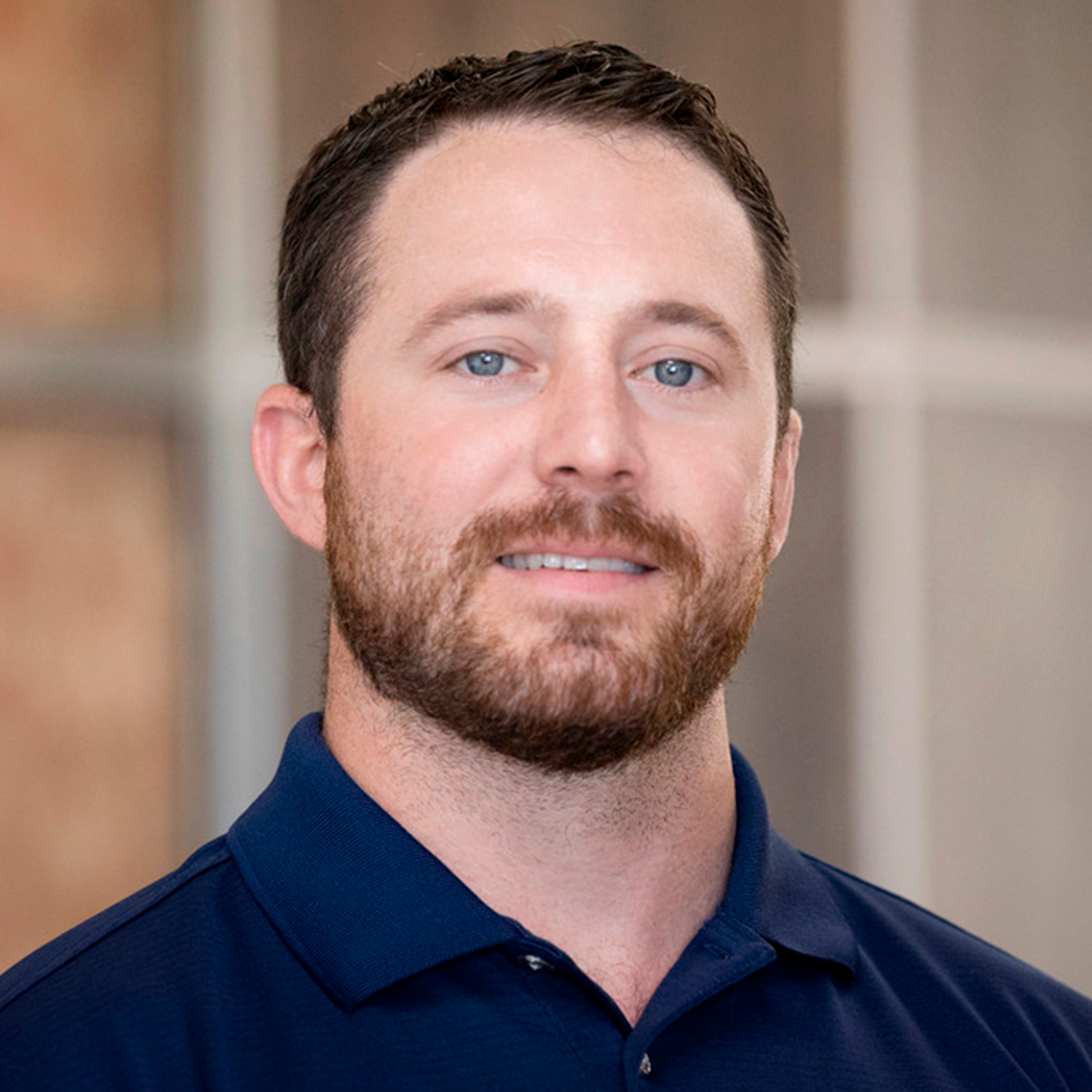


John Schlobohm
Relentless Ally
Public Education Construction Paragon
Operations Director John Schlobohm drives excellence with relationships and personal care
What does it take to build a K-12 and higher education Relentless Ally par excellence?
Ironically, in the case of 19-year veteran Operations Director John Schlobohm, it takes an operational leader who cut his teeth on a broad range of every other kind of project, from wood-framed multifamily housing to massive financial institutions. But on those jobs and in the years since, John has cultivated not just a commitment to construction excellence but a deep and abiding understanding of the things that really matter to our K-12 and higher education clients, both public and private alike.
With allies like Balfour Beatty and John on their side, our education clients rest assured that they’re receiving the very best – in scheduling efficiency, in budget maximization and in relationship prioritization.
Returning to the Mountains
After John completed his internship with Balfour Beatty (then known as Centex Homes, LLC), he made a quick pivot to our Carolinas commercial office team, building a massive facility for a major financial institution in Charlotte, North Carolina. While a powerful learning experience in the complexity of major renovations and upfits, John quickly jumped at the first opportunity for a more one-on-one, relationship-driven project.
As luck would have it, the project (and more to follow) was at his alma mater, Appalachian State University in Boone, North Carolina, building the Center for Student Leadership Complex.
“Building a new dorm at Appalachian State was a formative experience, learning the ins and outs of public construction,” says John. “My wife and I were newlyweds and excited to move to the mountains for two years, but really, it laid an important foundation for understanding the priorities and needs of our public education clients.”
Residence Hall Renovations
From Boone, John returned to Charlotte, did a stint in ground-up apartment construction and soon returned to the world of higher education, this time at the University of North Carolina (UNCC) at Charlotte. There, he managed the renovation of Holshouser Hall while another Balfour Beatty team built a ground-up residence hall next door, and all in close proximity to another contractor’s project. Not long after, John would return to UNCC work to renovate Scott Hall in a very similar manner to the earlier Holshouser.
The site management complexity at Holshouser Hall called back to his corporate office experience, but tempered by his relationship-driven management style and commitment to UNCC’s schedule and budget priorities. No easy feat, when renovating a 1970s dorm hall with unreliable as-builts and significant complications including the discovery of asbestos and sections of crumbling structural concrete and other previously unknown conditions
“When renovating aging campus infrastructure, you may not know what you’ll find until the job is underway,” John says. “We always conduct extensive preconstruction reviews to iron out the scope as much as possible. We can look at it, get some binoculars on it, reach out and touch what we can and even use newer tools like laser scanning, but some unforeseen conditions can’t be discovered without demolition.”
The real challenge, then, is fitting any change of scope into the existing schedule and budget, both paramount concerns for publicly funded entities like a state university, and doubly so when the university is committed to having a residence hall ready for students by a set date.
“The process can be tedious and requires extensive documentation and ongoing work with design partners and vendors to accurately reflect any change orders necessitated by uncovered existing conditions,” John adds. “In the meantime, our team is still sequencing interior renovation work around exterior and structural repairs without impacting the schedule. Every change is a delicate balancing act.”
John and the Balfour Beatty team ultimately turned over Holshouser Hall on time while minimizing the overall budget impact of unforeseen conditions. So when they turned to Scott Hall’s renovation for UNC Charlotte - a nearly identical sister dorm built in the same period of the university’s history – they leveraged every scrap of knowledge gained on Holshouser to its fullest advantage.
“Based on what we learned from Holshouser Hall, we recommended and implemented a more extensive preconstruction process, assessing Scott Hall for the kind of damage we found prior,” John says. “With processes like concrete sounding, we started from a more accurate baseline.”
Even with concrete sounding in the team’s toolbelt, however, they still ran into existing conditions that didn’t match the building’s 1970s diagrams at all. At every step, our team both made the necessary renovations and repairs work within the project schedule and provided the university with a strong, accurate, clean record of construction on which they can base any future work.
The Relationship Remit
Throughout projects like the Holshouser and Scott Hall renovations, John is adamant that there is no replacement for fostering a collaborative and communicative client relationship. Jobs like these two residence halls and more simply wouldn’t be possible without it.
He operates in that Relentless Ally collaborative mindset at all times, but he truly jumpstarts the process on each project with a simple core idea: How can we help?
“Building a strong relationship with clients, especially our public higher education and K-12 clients, has to start with listening,” John says. “We listen to their needs, learn their priorities, needs and desires for a given project and we use that to write scopes that are as reliable as possible.”
Scope reliability doesn’t just translate to firm numbers for project stakeholders. It also best sets the project team up for success, even as teammates and trade workers may come and go throughout a project lifecycle. It creates a system and an environment of excellence, where quality standards and the core mission of the project are non-negotiable and subject to accountability, not just tied to the leadership of a single person like John.
“Over time, as with the difference between Holshouser Hall and Scott Hall, clients come to see how that relationship grows stronger and pays dividends from, project to project,” John adds. “We value our repeat clients so highly not out of convenience or ease, but because we all learn lessons together. We learn how our Relentless Ally mindset can best serve the client’s needs, which can be different for every school or university or project.”
Public Construction – the Balfour Beatty Way
As John looks ahead to an exciting public construction market, from K-12 schools to university facilities to state offices, he’s confident in his and Balfour Beatty’s unique ability to combine the advantages of relationship-driven collaboration with our resources as an international contractor.
“In public construction, every dollar and every day counts more than ever. These are projects funded by our communities and for our communities, and our schools and public agencies depend on their completion,” John says. “We serve our clients best when we do what already comes naturally as part of the Balfour Beatty Way – investing the time, personal care and excellence required to build projects right, on time and at the best value.”
Read More





Jason Bales
Relentless Ally
Experience That Delivers
For Jason Bales, rail runs in his blood. It's a family legacy built on steel, service, safety and stewardship.
Growing up in Barstow, California, which is one of the nation’s major rail hubs, Jason could see the yard and mainline from his house. Trains moved past daily, their echoing whistles and rumbling freight cars forming the soundtrack of Jason’s youth.
But rail wasn’t just of proximate interest to the Bales family. Jason’s father spent 42 years with BNSF, and Jason remembers the pride he took in his work. Today, the lessons Jason learned from his father have become the foundation of his own profession and calling.
Jason knows firsthand that railroads do so much more than move trains. As a critical backbone of the U.S. economy, they power businesses, supply chains and livelihoods. And keeping them running takes people who respect the work enough to do it right. As a project manager for Balfour Beatty, Jason makes it his mission to design, build, modernize and maintain best-in-class rail infrastructure.
The Client Advantage
Jason doesn’t just understand rail construction from one seat. He’s seen it from nearly every role and perspective. That diverse skillset and point of view give Balfour Beatty’s rail clients a powerful advantage.
Beginning his career as a track laborer at BNSF, Jason learned the industry ropes swinging hammers, running equipment and learning from the ballast up. His career progression took him to new companies across multiple territories and states, where he gained experience leading crews, managing operations, advancing safety and training programs and overseeing regional rail activities across hundreds of miles of track.
Each step expanded his understanding of rail as both a business and an operating environment. He learned how maintenance decisions affect freight movement. He learned how small misses can create big risks. He learned how vital it is for field teams to understand not only what they are doing, but why it matters. Most importantly, he learned that safety cannot be treated as a slogan. It must be believed, modeled and built into every decision.
“I realized how dangerous the industry was out there working next to trains doing 70 miles an hour,” recalls Jason.
The breadth of Jason’s experience represents more than an impressive résumé. It’s a differentiator for Balfour Beatty rail clients like Metrolink. They need a partner who understands what is at stake before, during and long after the work is complete.
Seeing the Work Through an Owner’s Eyes
One of Jason’s greatest strengths is the perspective he gained working directly for a railroad owner/operator. At BNSF, he was often on the owner’s side of the table, bringing in contractors to support projects and evaluating what made those partnerships successful.
What stood out most was clear communication, defined scope and early alignment. Everyone needed to understand the work, expectations, timelines and coordination required to return track to service. In freight rail, delays are not abstract schedule impacts. They affect real-time operations and can come at a significant cost.
Jason brings that owner’s lens to Balfour Beatty. He understands the pressure clients often face to maintain operations, manage cost and make decisions that will stand the test of time. He also understands that many clients rely on their contractor to guide them through technical decisions.
That is where Jason’s experience shines. He not only provides wise counsel on what scope needs to be performed, but also why it matters to safety, operations and long-term reliability.
“If a customer is trusting you and your company to do a project for them, it’s not just my name on the line. It’s the whole company’s name on the line,” Jason explains. “I take the time when I’m out there with customers to really explain in depth what’s going on, what I’m looking at before the project even starts, what the issues are, what needs to be fixed and why it needs to be fixed.”
The Cost of Doing It Halfway
Jason believes owners deserve solutions that perform for decades, not quick fixes that simply push problems down the track. In his experience, risk often takes root when a project is made to look cheaper at the start by cutting scope or taking shortcuts.
Changing a portion of deteriorated ties, for example, may reduce initial cost. But if the surrounding ties remain in poor condition, the new work can deteriorate faster, affecting track gauge, surface and performance. Track that an owner expected to last for decades may require renewed attention much sooner, resulting in unplanned maintenance, remobilization and cost.
The stakes are not only financial. Substandard track work can create serious operating risks, including derailments that may endanger train crews and surrounding communities.
That is why Jason connects so strongly with Balfour Beatty’s rail approach: rail done right the first time.
“I never want to see anybody on our track get hurt, during a job or after we turn it over,” says Jason. “That is a big factor for all the work we do, making sure it’s done right the first time and knowing everything we did is up to standards.”
Experience That Delivers
Jason’s role continues to expand alongside Balfour Beatty’s growing rail business. He supports day-to-day maintenance and inspections, helps manage larger projects, leads crew trainings, supports estimating for smaller projects and focuses heavily on client development.
When Jason talks to clients like Sacramento Regional Transit District about Balfour Beatty’s value as a rail builder, he doesn’t lead with slogans. He leads with proof.
He points to the way our project kickoffs are handled, with safety leaders involved early and directly with owners. He points to crews who take pride in the work they deliver. He points to a quality product that clients can rely on, not just at turnover, but for decades down the line.
“A lot of companies talk safety and quality,” Jason says. “But here at Balfour Beatty, we back it up.”
It is a practical approach, but it is also deeply personal to Jason.
In an industry where every outage matters, every decision carries consequences and every finished product must stand the test of time, that perspective is more than experience. It gives clients something increasingly rare: a Relentless Ally who understands their business as well as their project.
Read More


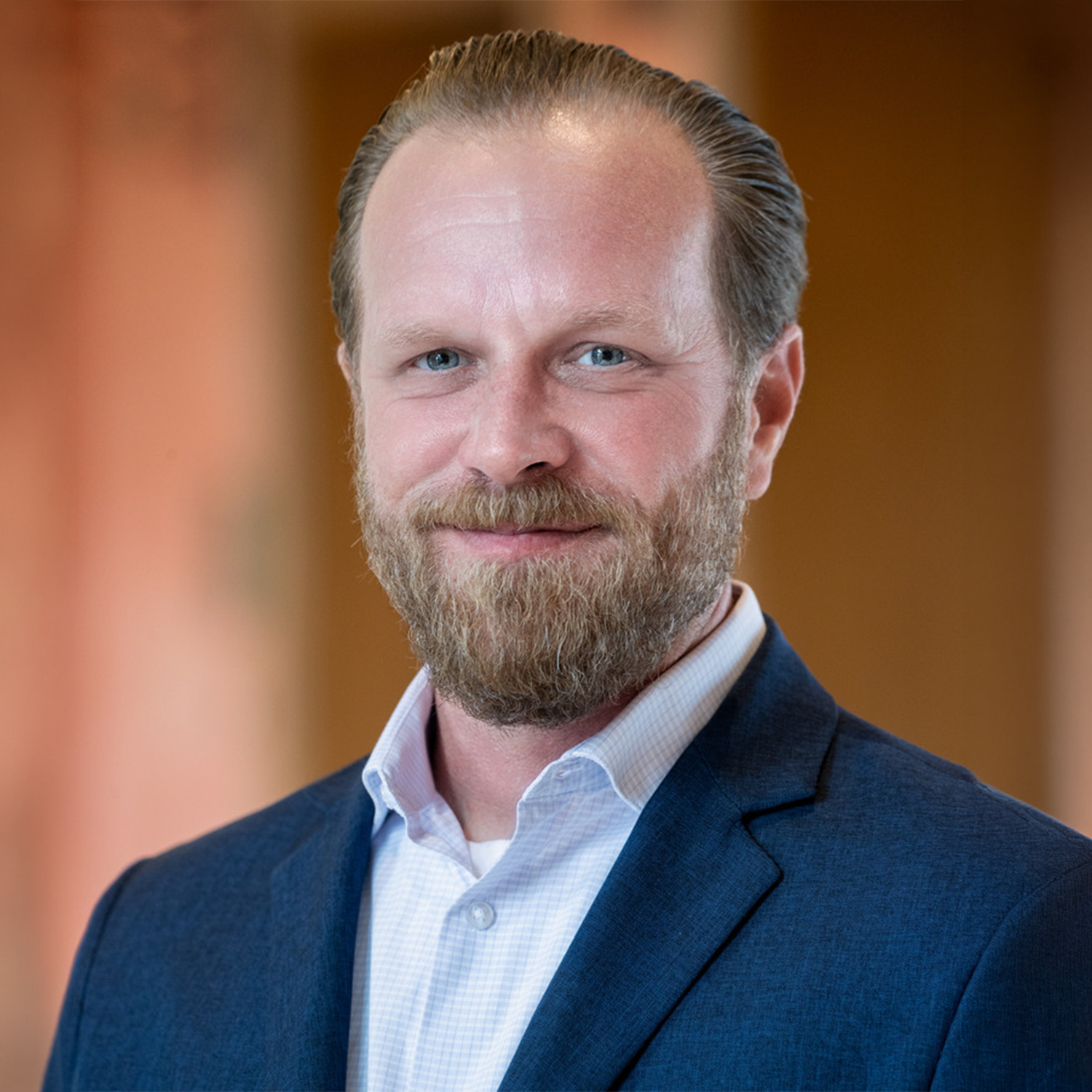


Travis McGarraugh
Relentless Ally
Relationship-Driven K-12 Construction
Schools may be built out of brick and mortar, cinderblock and linoleum, glass and turf, but leaders like Operations Director Travis McGarraugh know that they’re really built on relationships.
Travis joined the Balfour Beatty team in 2004 after beginning his construction career in Austin in 1996. He focused on special projects from the outset, delivering fast-paced renovations and tenant improvements throughout the Austin area. Over the years, that expertise evolved into leading complex summer remodels and additions for school districts across Central Texas, where tight schedules, occupied campuses and minimal disruption are critical to success. Today, as Balfour Beatty continues to expand its K-12 operations throughout the region, Travis serves as an invaluable resource and a trusted Relentless Ally, bringing decades of experience, strategic leadership and a commitment to helping clients successfully navigate their most challenging projects.
At every level of K-12 construction, from a vestibule renovation to a security overhaul to complete adaptive reuse and even new construction, Travis and the Balfour Beatty team build direct and collaborative relationships with every client, guide crucial decisions with industry expertise and accept nothing less than a job performed safely and on time.
No Replacement for Relationship
Over his 30 years of industry experience, Travis has worked with a majority of the school districts in central Texas, both large and small, and on projects of equally diverse sizes. If there’s one thing that has become clear to Travis and our K-12 teams, it’s that there can be no real replacement for the power of relationship-driven collaboration.
“Projects in the private sector can have their complex layers of client stakeholders, but when building schools that our communities rely on, collaboration takes on a deeply personal meaning,” Travis says. “Our project leaders – project managers and superintendents alike – are consistently working with district superintendents, district construction managers, principals and even school staff to identify short- and long-term goals.”
To strengthen this close-knit client-contractor relationship, Travis and others build trust by learning the unique needs and goals of each school district and solidifying their confidence in Balfour Beatty’s ability to deliver. Clients such as the school districts for Austin, Georgetown, Marble Falls, Jarrell and Lake Travis are learning exactly that right now.
Direct relationships can often speed up critical decision making on materials, design changes and scheduling. When projects must be completed on time for new academic terms, every hour saved through earlier collaboration matters more than ever.
“Our clients know that they can call us at any time, with any question, but they often don’t need to,” Travis says. “Our mindset is to collaborate proactively, identify potential issues before they have a chance to disrupt schedules or budgets and come to the client with ready-made solutions.”
Sophistication at Every Size and Budget
More than 100 Texas school districts voted on public bonds this spring, with measures ranging from $2M to $5.9B. Districts are seeking to address diverse issues, from aging facilities to rapid population growth, both of which our central Texas teams are equipped to handle. What’s more, our teams have the industry knowledge needed for even smaller districts to make the most of their bonded dollars and efficiently navigate the bond construction process.
“Larger districts are often very familiar with the process and have robust standards, early RFP releases and other advantages,” Travis says. “Where our team can truly make a difference is guiding smaller district that may be bidding out larger bond projects than ever before.”
A rising tide – like a massive crop of statewide bonds – could lift all ships, but Travis and the central Texas Balfour Beatty team see it as our duty to ensure that smaller districts don’t miss the boat.
“With our direct client collaboration and emphasis on relationships, we are a truly local contractor,” Travis says. “But importantly, we’re also a national contractor, and we combine our local feel with national resources, from trade relationships to material vendors to new technologies.”
Balfour Beatty’s dual strengths deliver for large districts, too. Our recently completed renovations of Odom and Williams elementary schools for Austin ISD are testaments to our team’s dynamic and collaborative approach, converting two aging campuses with outdated floorplans and design aesthetics into modern schools that will serve the Texas state capitol for many years.
Safety at Speed
Every K-12 project presents unique safety challenges. Work may begin with school still in session, or important points of ingress and egress to parking lots or even buildings must be carefully managed, but our Zero Harm® commitment to clients is to ensure that – whatever it takes – our teams are always Safe to Start.
“Like so many priorities, our safety mindset rests on our collaborative mindset,” Travis says. “We invest the time and care required to understand student and vehicle traffic and create a customized safety plan. Especially on K-12 projects, operating safely is rarely the easiest route but it’s always the right one.”
Safety collaboration starts early on a K-12 project, when our team prioritizes the logistics of separating students, faculty and the community from all construction activities. Beyond just collaborating with client stakeholders on site plans and scheduled student movement, Travis adds that part of our expertise is simply from experience and understanding how student age can impact safety planning.
“For younger students, a basic layer of safety can often be as simple as locked doors and gates with proper oversight,” Travis says. “But as students get older, with more freedom of movement, more curiosity and perhaps a bit more impulsive behavior, we enhance our site protections even more. Older students are also more involved in before- and after-school programs, requiring even more schedule collaboration.”
Our work around school schedules also presents an opportunity to reinforce our recent identification of live traffic as a fifth fatal risk in construction. School parking lots experience traffic surges en masse unlike any local business or office, and that’s without construction vehicles. Under Balfour Beatty’s safety leadership and with clear communication, peak traffic hours won’t put students or our workers at risk,
Client-Centered School Construction
As our Central Texas K-12 project footprint continues to expand, one thing will simply never change: Balfour Beatty’s client-first approach to construction, serving as a true Relentless Ally through every stage of a project lifecycle and building campuses our communities can be proud of.
“When K-12 clients choose Balfour Beatty as their construction partner, they know they’re getting the best,” Travis says. “The best resources, the best leaders, the best solutions and, most importantly, the best safety practices. It’s the only way we know how to build.”
Read More
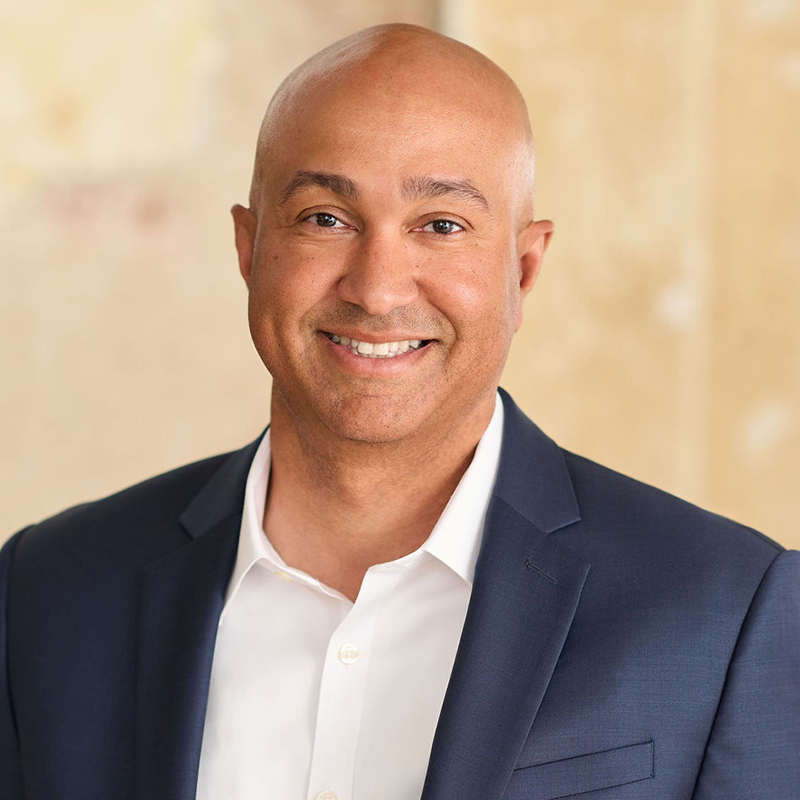
David Chachu
Relentless Ally
A Trusted Leader for Complex Builds and Critical Infrastructure
David Chachu brings a mission critical mindset to high-stakes projects across the Mid-Atlantic
For more than two decades, David Chachu has built his career at Balfour Beatty on some of the most complex, high-stakes projects in the nation where failure isn’t an option and performance defines everything that follows. Today, he brings that Relentless Ally mindset to mission critical work across the Mid-Atlantic, helping clients navigate one of the fastest moving and most demanding sectors in all of construction.
David’s introduction to data centers came early in the industry’s evolution, supporting a highly complex facility designed to power critical financial systems along the East Coast. From day one, the work demanded redundancy, resilience and precision, and these principles continue to define how David approaches every mission critical project today.
What’s changed, he notes, is not the stakes of mission critical work but rather the speed, scale and operational resiliency that a construction partner must bring to the table to be successful.
“It's no longer just about building the facility,” David says. “Clients need construction partners who understand how to get them online fast and who can expertly navigate changing designs, evolving technology and resource constraints without losing time.”
Enter David, an operations leader trusted for the clarity, speed and effective controls he brings to sophisticated builds.
Translating Federal Complexity into Mission Critical Certainty
Balfour Beatty’s extensive federal expertise creates a distinct advantage for the delivery of mission critical projects, rooted in the unique precision, security and operational discipline these environments demand. David’s experience reflects that same foundation, with an esteemed portfolio of large-scale, complex and systems-driven federal projects that align directly with the rigor of today’s data center environments.
David’s legacy in the Mid-Atlantic includes marquee projects such as the $1.4 billion, 2.2-million-square-foot National Geospatial-Intelligence Agency Campus East Headquarters, which included a major embedded data center and supporting utility infrastructure. From pursuit to final close-out, our team rose to the magnitude of the challenge before them, delivering this integrated design-build project for the U.S. Army Corps of Engineers six months ahead of schedule and on budget. David’s mark can also be found on the $222 million National Science Foundation, the iconic design-build Pentagon Memorial and numerous other security-driven facilities for federal clients. Though unique in scope, each of these projects required enhanced systems performance, redundancy and precision execution.
“At their core, data centers are highly focused on mechanical and electrical performance,” David explains. “Some of our federal projects with embedded data centers demand a superior level of system integration and building performance standards that often surpasses a typical data center.”
No contractor is more prepared to meet the rigor of modern mission critical projects than one like Balfour Beatty and industry leaders like David, who bring a multi-decade legacy of successful delivery for the federal government. With active data center projects and MV duct bank work underway, our Mid-Atlantic mission critical team under David’s leadership is proving our presence isn’t just established – it’s expanding every day.
Leading Through Preconstruction
No matter what the mission critical product type or scope, Balfour Beatty creates a strategic advantage for our clients and partners long before construction begins.
In a sector where speed-to-market drives decision making, David collaborates closely with clients, designers and trade partners to understand constraints, identify risks early and build schedules that hold up under pressure. During construction, small design changes to mechanical and electrical systems can have outsized impacts on performance and delivery.
This is where David adds tangible value our clients feel, working in real time to adeptly navigate evolving design requirements and ensuring facilities are built to accommodate future server expansions and high-performance computing (HPC) upgrades.
“It’s not just about what’s possible. It’s about what’s realistic,” David explains. “We’re helping clients understand how design decisions impact schedule, how resources affect sequencing and how to make adjustments without jeopardizing delivery.”
David prioritizes:
- Navigating long-lead equipment and supply chain constraints
- Aligning labor availability with aggressive delivery timelines
- Evaluating design changes in real time to minimize schedule impacts
- Bringing practical solutions that balance cost, performance and speed
For David, it’s this ability to “see around corners” during preconstruction that sets Balfour Beatty teams apart and positions our projects for success long before they break ground.
A Partner in a Changing Market
As the mission critical sector continues to scale, client expectations have shifted.
“Clients realize their success depends on having the right team,” David says. “It’s not about pushing risk down. It’s about working together to get the project done successfully.”
That shift plays directly to David’s strengths. Known for his collaborative, pragmatic approach, he works to build alignment across all stakeholders and ensure decisions are made with the project’s big picture in mind. He also brings a balanced perspective on growth, recognizing that long-term success in the mission critical sector requires a holistic understanding of future-proofing power grid and utility planning, site and regulatory strategy, contract structuring and more.
Building What Comes Next
With experience spanning data centers, federal infrastructure, complex mixed-use developments and more, David Chachu knows that mission critical is more than a sector. It’s a mindset. As Balfour Beatty continues to build the critical infrastructure powering our nation, David’s fundamentals remain the anchors for his teams: strong plans, effective collaboration, clear communication and the ability to adapt quickly and thoughtfully when conditions change.
Read More