The Power of Positive Controls on Public Infrastructure
For the untold millions of daily drivers in the U.S., the exact arrangement of a highway interchange is, at most, an afterthought when traffic strikes. Given even less consideration is the immense construction expertise required to safely build these complex intersections, manage the flow of traffic during construction and deliver innovative new traffic solutions that keep our roadways moving.
Yet these are the very considerations that Balfour Beatty infrastructure experts like Construction Manager David Richmond and clients like the Texas Department of Transportation (TxDOT) contend with every day. From longstanding highway solutions that are tried, trusted and known to the Texas public to ones new and unfamiliar, David and our infrastructure experts wield the Zero Harm® principles and technical expertise to ensure timely and cost-effective delivery, safe transitions and better public relations.
It's Pronounced “SPOOEY”
On the Oak Hill Parkway (OHP) project outside Austin, Texas, the Balfour Beatty team and joint venture partner Fluor Corporation are reconstructing and widening a seven-mile stretch of US 290, one of the state’s busiest US highways. At the highway’s intersection with State Highway 71, the team is currently hard at work completing a Single Point Urban Interchange, or SPUI. 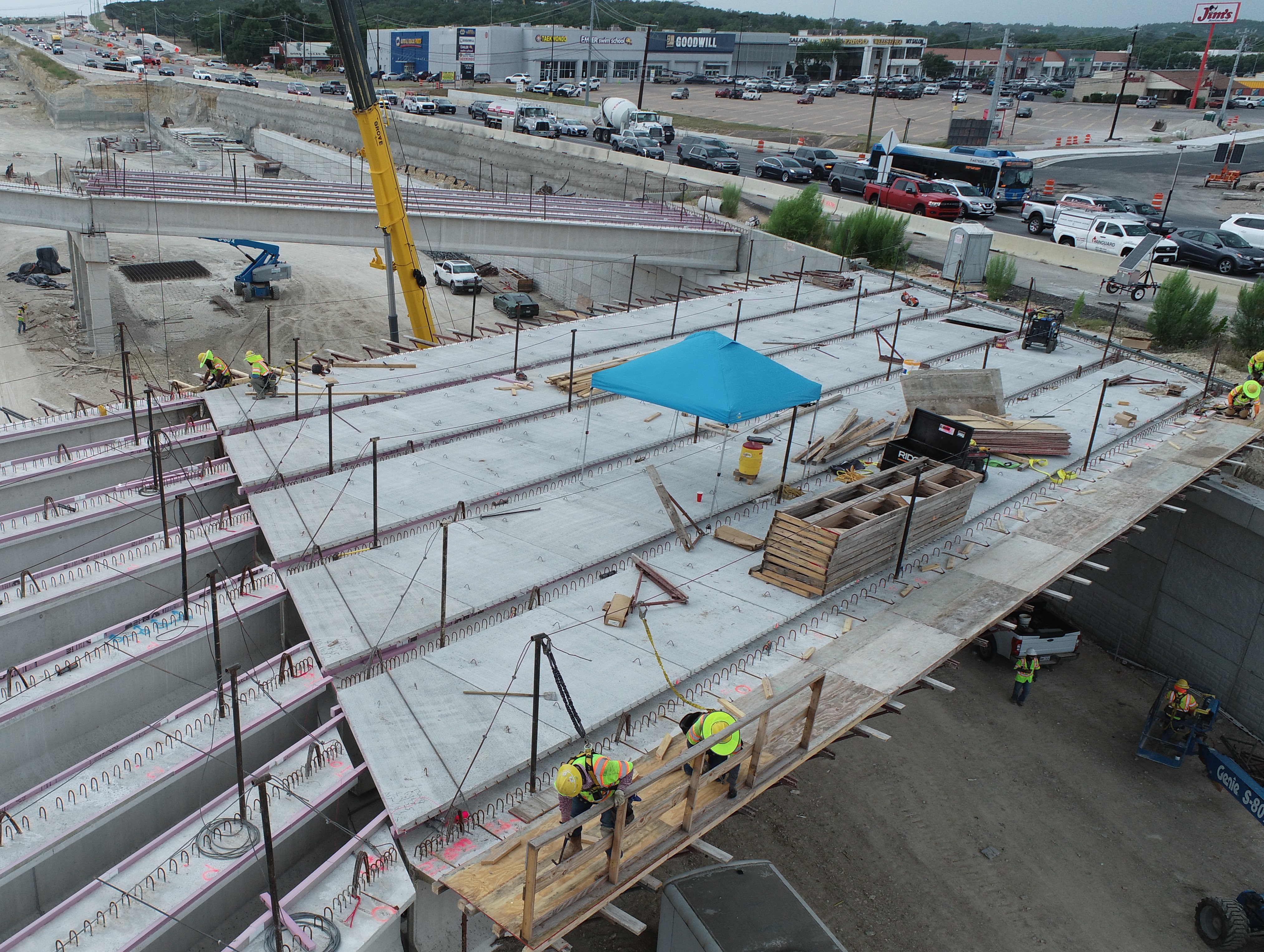
SPUIs are hardly a new highway solution and have been used extensively in other parts of the country, but Texas drivers may find them unfamiliar. Texas has made such extensive use of the “loop around” interchange for decades that its more common colloquial name is the “Texas U-Turn.” On top of the baseline unfamiliarity, OHP’s SPUI is somewhat singular as well, connecting two highways in a “Y” formation rather than a simple perpendicular cross.
“A SPUI essentially allows TxDOT to provide safer, less accident-prone routes through a high-traffic area that may have two-way service roads on both sides, or otherwise limited space,” says David. “All traffic exiting the highways converges on one raised intersection with one major traffic light, rather than one each on the west- and eastbound sides.”
Location, Location, Location
And at OHP, space wasn’t just a consideration for the highway’s final product. While that was an important driving force for designing a SPUI in the first place, much more critical to Balfour Beatty’s daily operations were the safety implications of a relatively constrained working area. Any close proximity to live traffic is such a serious safety consideration for construction workers and the traveling public that Balfour Beatty recently identified it as the fifth of the Fatal Five risks.
So what does Balfour Beatty do when faced with limited space, live traffic on all sides and hundreds of workers and many more thousands of drivers to keep safe? Create our own working space.
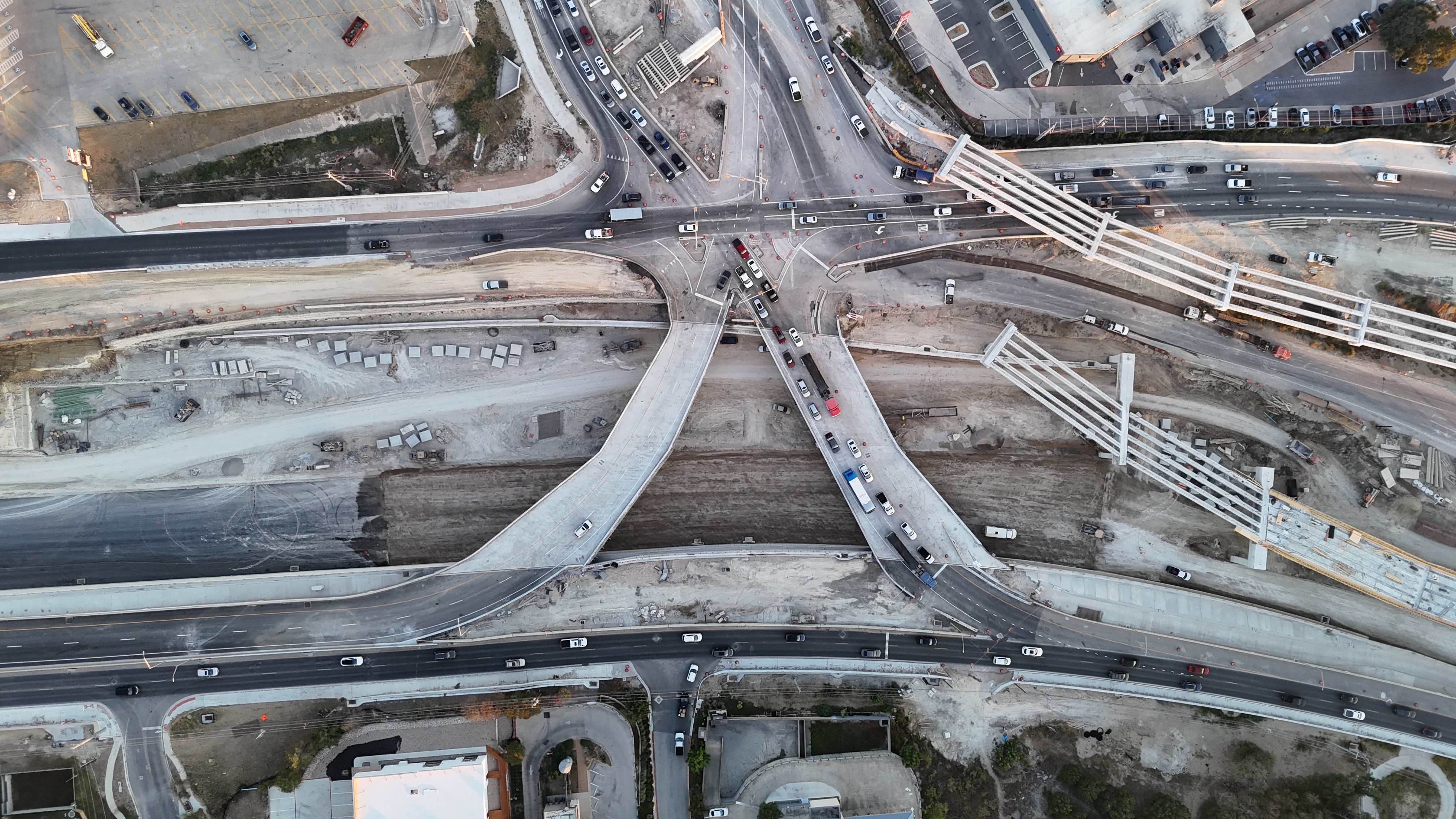 “We took the approach of starting with the basics, creating as much safe working space for ourselves and for traffic that we could,” says David. “Before any part of the project started going vertical, we paved nearly an acre. The breathing room it afforded gave us far more – and better – tools to work with for keeping people safe.”
Paving so much extra space – more even than the project required for easements and future expansion considerations – does have a positive impact on the project schedule and budget, as well as on its many stakeholders. But as an industry leader in safety, Balfour Beatty stands firm in our core belief that it’s the right choice to make when lives are on the line.
“With the flexibility of extra space, we have minimized or often eliminated work adjacent to live traffic without the full protection of a concrete barrier,” says David. “The traffic safety equation is always at the forefront of our minds, but with creative solutions, careful engineering and collaboration with our design partners and TxDOT, we engineered so many potential risks out of that equation.”
It's All About Transitions
Most eastbound portions of the OHP SPUI are now open to traffic, with some temporary routes and barriers still in place and awaiting finishing touches, while Balfour Beatty and Fluor continue work on the Westbound side. Reaching this point – with all of the traffic switches, local business access and more to consider – required nearly as much finesse as the more immediately critical safety measures. 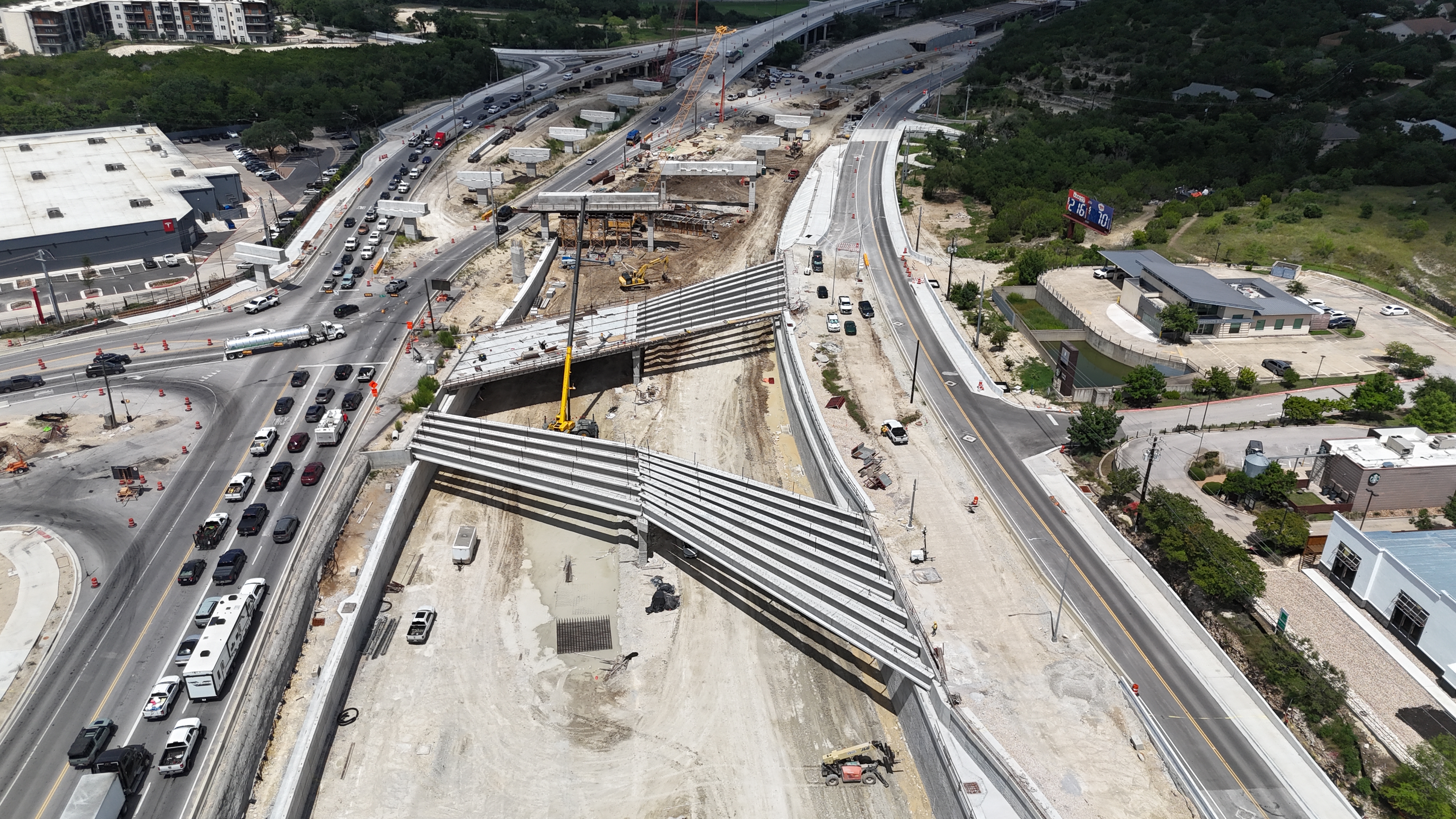
Again, through careful collaboration and a deep understanding of the flow of Texas roadways, David and the team worked with TxDOT to identify and accomplish the most important traffic flow goals while still creating ample room to safely work.
“We completed the two overhead bridges ahead of schedule, which created a great deal of goodwill and trust with our partners at TxDOT,” David says. “Still, understanding the importance of access to local businesses during the transition, we built a temporary ‘shoofly’ lane to create that access.”
In the lead-up to those first critical switches, the team also worked closely with TxDOT to prepare the public for the unfamiliar environment. TxDOT has a comprehensive and proactive public information team, but their communications to the driving public depend on Balfour Beatty, Fluor and our partners having a solid plan in place, adhering to that plan and doing so all on a reliable schedule.
“Throughout the process of design, preconstruction and construction logistics planning, we repeatedly consider the functional flow of traffic, how traffic switches will be perceived by the public and how temporary routes could create bad driving habits,” David adds.
Positive Controls, not Productivity
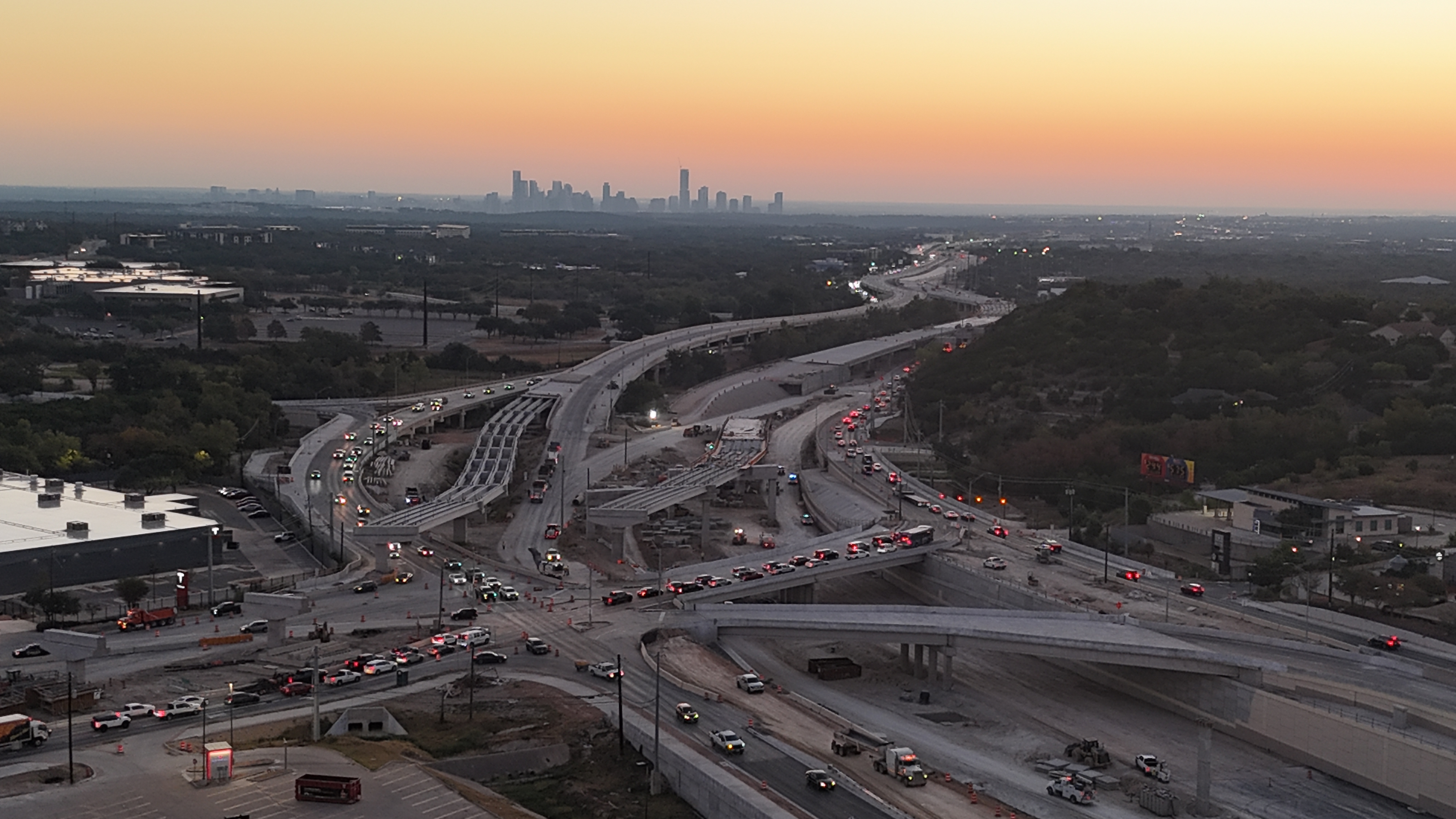 Productivity, David says, is ultimately not the point of our critical infrastructure work like Oak Hill Parkway.
“At the end of the day, we care deeply that the work is completed correctly. More importantly, we care that it’s completed safely for both our teams and the driving public,” David says. “We lean on our many combined decades of experience and the power of positive controls – what we can proactively manipulate to create safer outcomes rather than reacting to incidents.”
That dual commitment to excellence and safety – never one at the expense of the other – is what our infrastructure expertise is all about, on full display at the Oak Hill Parkway project, I-635 and Skillman Bridge in North Texas, highways and bridges throughout the Southeast and our rail and water infrastructure in California.