Traffic Switches (Without Hitches)
Ahead of Memorial Day 2025, Balfour Beatty’s team on the US 70 James City Improvements project in James City, North Carolina, executed one of the largest and most complex traffic switches the state had seen in many years, all without incident or delay.
Just months later, the team did it again.
Now they’re on the verge of a thrilling three-peat, with a third and final traffic switch planned for this spring.
Balfour Beatty’s leadership through each process has been instrumental in ensuring Zero Harm not only for our workers, but also the driving public on this busy stretch of highway. In close partnership with the North Carolina Department of Transportation (NCDOT) and design partner STV, our team is pushing the industry forward with innovative approaches to traffic switch management and tech-powered Zero Harm initiatives including “The Fatal Five” and implementation of the HAAS Safety Cloud® system that make safety an integral aspect of design, not an afterthought.
Safety by Design
This mantra became our team’s guiding principle from the earliest stages of project pursuit and into planning and design. In keeping with our Zero Harm values and mindset, the team believed that proactive planning and both operational and technical innovation presented the safest means to execute complex traffic switches on an extremely busy corridor.
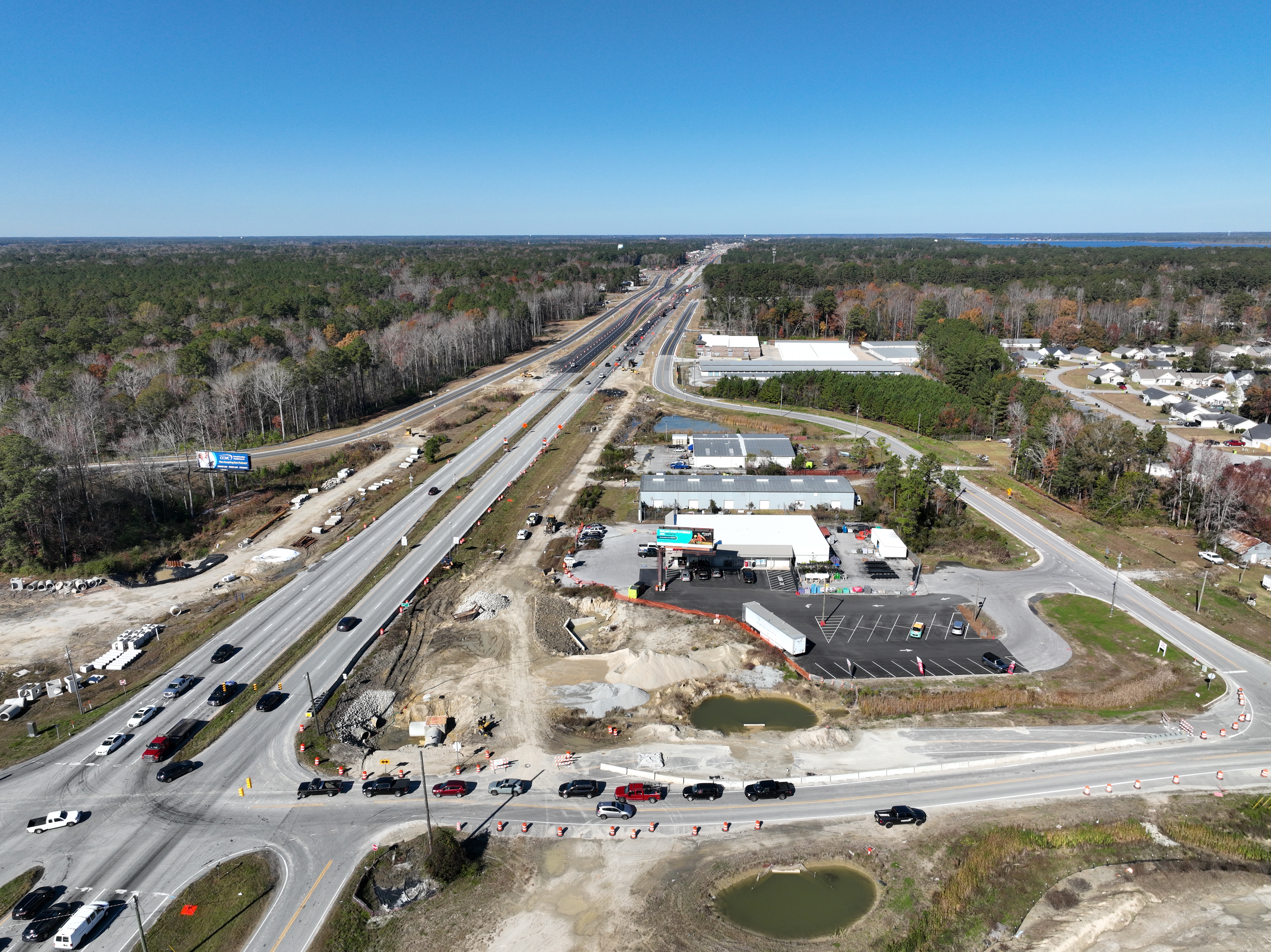 To that end, the project’s design-build collaborative contracting method was an important driver of success, allowing our direct and constant collaboration with partners at STV to yield the most efficient solutions on an accelerated schedule. Early on, the team identified Reduced Conflict Interchanges (RCI) as an ideal method for both expanding the interchange’s traffic capacity and simultaneously enhancing safety.
“The road’s existing conditions were never meant to or expected to handle the traffic they see today, especially not during active construction,” says Senior Project Manager Josh Sommer. “Utilizing multiple temporary RCIs makes it safer and more intuitive for daily drivers while we prepare the interchange growing traffic needs and future expansions.”
Of course, completely overhauling the traffic paradigm of a major intersection requires significant adjustment for the drivers who frequently use it. Preparing the public for a plan – and sticking to that plan – is no small task.
Keeping the Roads Running
Preparation for the traffic switches began years in advance and ramped up in the months and weeks immediately before the 2025 switches. Drivers were alerted to the upcoming changes on various communications channels, given NCDOT diagrams of the temporary and eventual final configurations and an understanding of Balfour Beatty’s presence in the area and our planned construction sequences.
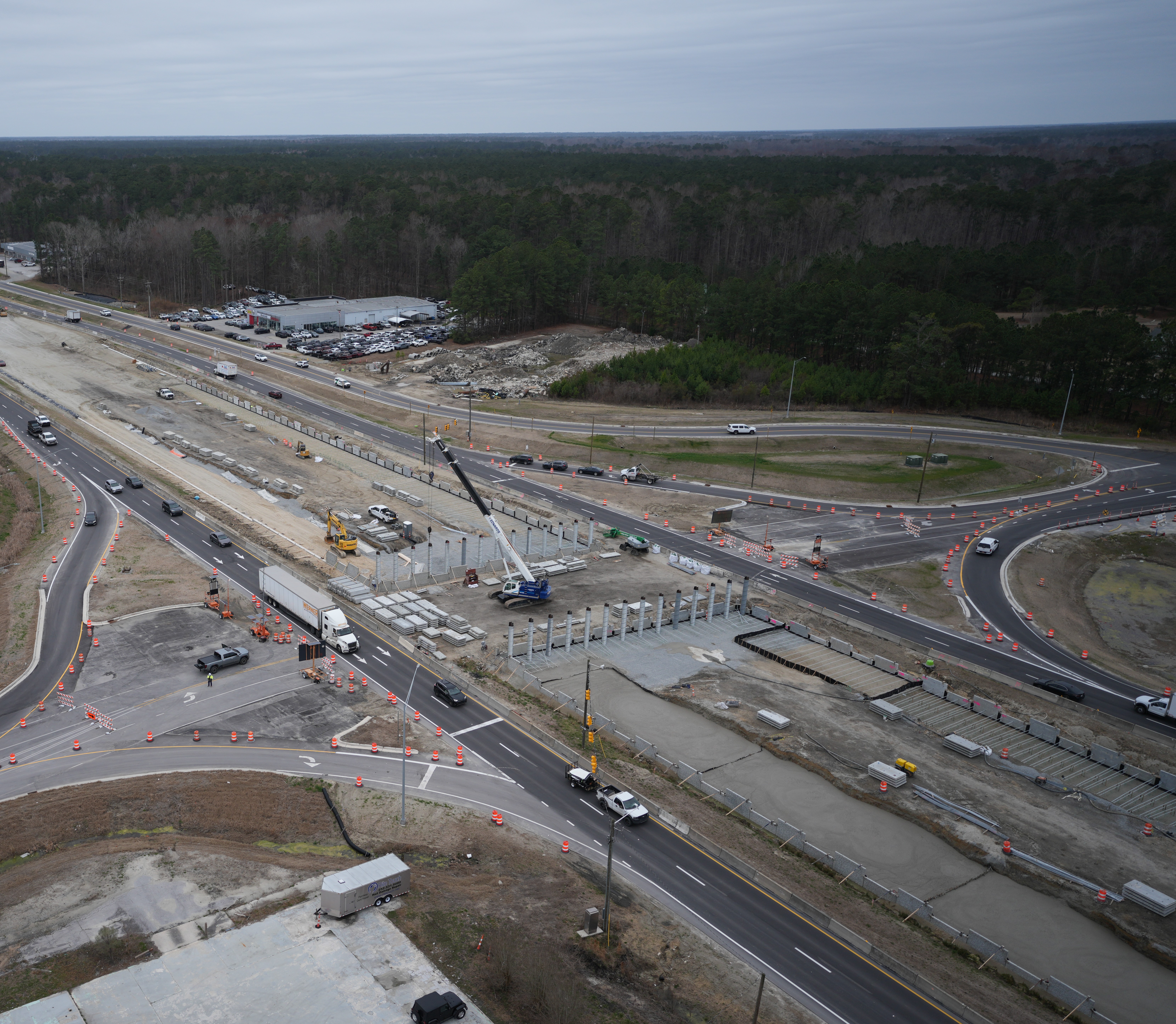
In 2025, Balfour Beatty formally identified live traffic as a critical fifth Fatal Risk, and a project like James City is a prime example of how our teams’ operational excellence and schedule adherence make our Zero Harm mission possible and reduce the many forms of safety risks that originate from live traffic.
To some degree, it was part of our stated milestones with NCDOT – the first traffic switch had to be completed over just one weekend, and all in advance of the 2025 Memorial Day holiday weekend. US 70 through James City becomes a major seasonal thoroughfare for vacationers, so our team had a hard and fast deadline after which no major lane closures or switches could occur.
“To sum up our operations ahead of both traffic switches, they were extraordinarily well choreographed,” Josh says. “We managed expectations early, set clear and achievable goals and made every effort to hold to them. And under a design-build model, we had the flexibility to collaborate directly with our STV to overcome unforeseen challenges with utilities and design features.”
Even after the major traffic switches, the RCI design continues to pay dividends in both safety and traffic efficiency – as the project proceeds to erecting a cast-in-place bridge over steel girders, no additional lane closures are required and our teams and drivers face minimal points of direct interaction.
“Off without a hitch” Heading Off Live Traffic Risk
While Reduced Conflict Interchanges were an integral part of both our safety strategy to mitigate live traffic risk and the schedule efficiency it offered NCDOT, our team knew they could take Zero Harm one step further.
Enter our use of Safety Cloud® by HAAS Alert, the world’s largest vehicle-to-everything (V2X) communications network that pushes real-time alerts to drivers’ cell phones or onboard navigation systems. Safety Cloud® has empowered our teams to deliver more than 63,910 alerts across three projects from October 2024 through March 2025, raising awareness of traffic switches, road hazards, close proximity to work crews and more.
“Safety Cloud® gives our teams incredible peace of mind and hopefully fills communications gaps not caught by the already incredible effort of NCDOT’s public information team,” says Josh. “We’re all human, and we can all easily miss emails, social media posts and road signs. Safety Cloud® gives us one more chance to get drivers’ attention, protecting both them and us.”
Maximizing Safety and Efficiency
At the core of our Zero Harm mindset and the way our teams approach highways and bridges construction is a firm belief that safety, budget efficiency and schedule acceleration need not be mutually exclusive missions.
On projects like James City, our teams can maximize them all. A safer project, enabled by solutions like Reduced Conflict Interchanges, carefully coordinated traffic switches and cutting-edge technologies like Safety Cloud® is also a project that will experience fewer delays due to operational inefficiency or even incidents with the driving public.
But it’s the human element that truly is most important to us, and we’re proud to partner with clients like NCDOT, designers like STV and our many trade partners in the Southeast who understand that no injury or loss of life is worth any saved expense. Doing things the Balfour Beatty way, creating a project designed from the ground up to be safer and more efficient, we can have it all.